What Actually Makes a Pen 'Premium': Materials, Nib Grinding, and Where the Price Goes
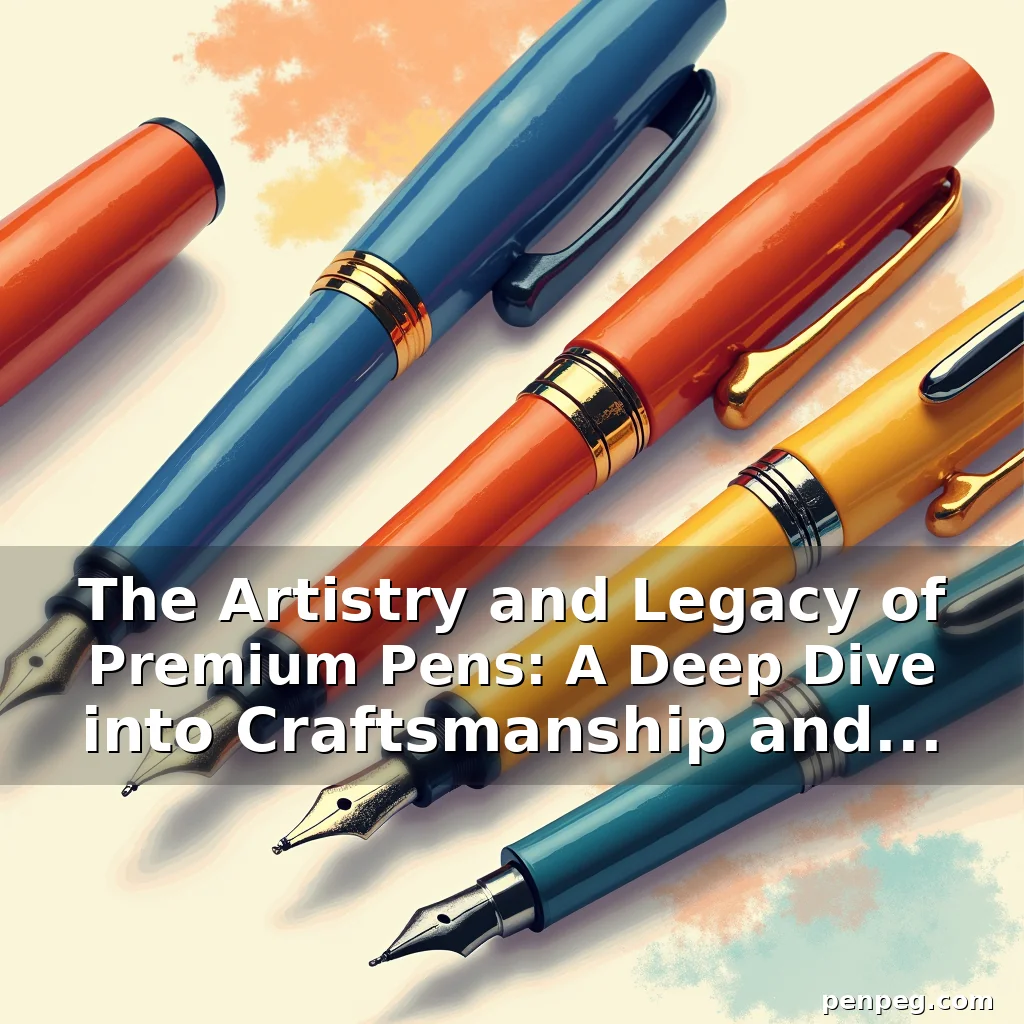
The price gap between a serviceable steel-nib pen and a pen ten times its cost isn't purely branding — some of it genuinely changes how the pen writes and how long it lasts, and some of it is closer to jewelry. Separating the two is useful before spending real money, because the upgrades that change the writing experience and the ones that mostly change the price tag aren't always the ones you'd guess.
Nib material: steel vs. gold, and what actually differs
Entry and mid-range pens almost universally use stainless steel nibs, which are durable, consistent, and inexpensive to manufacture at scale — and for most people, a well-tuned steel nib writes indistinguishably from a gold one in day-to-day use. The step up to 14k or 18k gold changes one real thing: gold is a softer, more flexible metal than steel, so a gold nib has a small amount of natural spring or "give" under pressure that a stiffer steel nib doesn't, producing subtle line-width variation for writers who apply varying pressure. This is a genuine mechanical difference, not a placebo — but it's also a difference that matters far more to someone who already writes with pressure-sensitive technique than to someone with a light, uniform hand, for whom a good steel nib will feel nearly identical for a fraction of the price. As a rough sense of the market, steel-nib pens commonly run in the tens to low hundreds of dollars, while gold-nib pens typically start where steel pens top out and climb well beyond that for hand-finished or limited pieces — the material itself, plus the far more selective, slower gold-nib manufacturing process, accounts for most of that jump.
Hand-finishing and quality control: the invisible cost
A meaningful part of what separates a mass-produced pen from a premium one happens after the nib is stamped or cast: hand-tuning the tines (the two halves of the nib) so they're perfectly aligned and gapped, smoothing the tipping material so it glides without catching on paper fibers, and individually testing ink flow rather than relying purely on batch consistency. This labor is largely invisible in a spec sheet — two pens can list an identical nib material and width and write completely differently because one was hand-tuned by someone checking it under magnification and the other wasn't. It's also the reason a cheap pen can sometimes surprise you by writing beautifully out of the box, and an expensive one can occasionally disappoint: manufacturing variance exists at every price point, hand-finishing just narrows it.
Barrel material: functional differences vs. purely aesthetic ones
Resin and acrylic barrels — the material most pens at every price point actually use — are light, durable, and can be produced in nearly unlimited colors and patterns, including hand-poured, one-of-a-kind acrylic blanks that command a real premium purely for uniqueness rather than function. Precious-metal barrels (sterling silver, gold-filled, solid gold) add genuine weight and durability but also genuine cost tied directly to metal prices, and they're a largely aesthetic and status choice rather than a functional writing upgrade — a resin pen doesn't write worse than a silver one. Celluloid, the material vintage pens are famous for, has a genuinely distinctive depth and shimmer under light that synthetic resins struggle to fully replicate, but it's also more finicky to manufacture (it's flammable in production and can shrink or warp with age), which is part of why few modern makers still use it and why the ones that do charge accordingly.
Limited editions: the part that's frankly about collecting, not writing
Limited-edition releases, special finishes, and numbered pieces command a premium tied to scarcity and collectibility, and that premium has essentially nothing to do with how the pen performs on paper — a limited edition and the standard model it's based on usually share the same nib and mechanism. There's nothing wrong with buying for collectibility if that's genuinely what you want, but it's worth being honest that this part of the price is about owning something scarce, not about a better writing tool.
Where to actually spend more, if you're deciding
If the goal is purely a better writing experience, the highest-value upgrades in rough order are: a well-reviewed, hand-tuned nib (steel or gold) from a maker known for quality control, a barrel material and weight that genuinely suits your hand and grip, and only then gold over steel specifically if you know you write with pressure variation that a softer nib would respond to. Limited editions, precious-metal barrels, and rare acrylic patterns are worth paying for only once you're buying for the object itself, not for how it performs — which is a perfectly reasonable thing to want, as long as you know that's what you're paying for.
Brand reputation and QC consistency: harder to spec, still real
None of what's above shows up as a line item on a spec sheet, but a maker's track record for quality-control consistency is a genuine, if intangible, part of what higher prices sometimes buy. Two pens with identical specs — same nib material, same width, same barrel construction — from a manufacturer known for rigorous individual testing versus one known for looser batch tolerances can have noticeably different odds of writing well straight out of the box, and noticeably different odds of a defective unit being caught before it ships. This is genuinely hard to evaluate without buying the pen (or reading enough specific, detailed reviews of that exact model rather than the brand's marketing), but it's part of why two "identical" pens on paper can carry different prices and, more importantly, different real-world reliability.
The used and pre-owned market: often the best value in the category
A gently used higher-end pen, particularly from a maker whose parts stay available and whose nibs can be serviced, is frequently the best value entry point into gold-nib or premium-material writing, since pens (unlike ink) don't get consumed and a well-maintained nib performs the same at year ten as it did new. The tradeoff is the same uncertainty that applies to any used purchase — you're trusting a seller's description of condition rather than a factory warranty — but for someone specifically chasing the writing-experience upgrades described above rather than the collectibility of a first-owner piece, buying used from a reputable specialist seller often delivers more actual nib quality per dollar than buying new at full retail.
Trial and exchange policies: buying the confidence, not just the nib
A meaningful part of what a specialty retailer's higher price sometimes buys, beyond the hand-tuning discussed above, is a genuine pre-purchase or post-purchase safety net: some sellers offer in-store nib testing on the actual pen you're considering, or a documented exchange or nib-adjustment policy if a pen arrives writing worse than expected. This matters more for premium purchases than budget ones precisely because manufacturing variance exists at every price point, and the cost of a disappointing nib scales with how much you paid for it — a $20 pen writing scratchy out of the box is an annoyance; a $400 pen doing the same thing without any recourse is a genuinely bad outcome. Buying from a seller who stands behind what they sell, even at a modest price premium over the cheapest available listing, is frequently the more rational purchase once the actual expected cost of a bad-luck nib is factored in rather than assuming every unit of a given model performs identically.
This is also where reading detailed, specific reviews — ones that describe how an individual reviewer's exact unit actually wrote, rather than general marketing copy about the model — earns its keep, since it at least gives some signal about how consistent a particular maker's quality control tends to be in practice, even though no review of someone else's pen guarantees anything about the specific unit you'd receive.
Warranty and long-term parts support: an underrated part of "premium"
A genuinely premium pen's value proposition extends past the day-one writing experience into how well the manufacturer supports it over years or decades of ownership — a warranty covering manufacturing defects, and just as importantly, the ongoing availability of replacement nibs, converters, and other wearable parts long after a specific model is discontinued. A maker known for servicing decades-old pens, replacing worn nibs, and stocking parts for long-discontinued models is offering something a cheaper, here-today-gone-tomorrow brand generally isn't, even if the two pens write identically out of the box. This is hard to evaluate before buying — it depends on a company's reputation and track record more than anything printed on the box — but it's a real, if invisible-at-purchase, part of what separates a pen bought to be a lifetime tool from one that's disposable in practice even though it isn't marketed that way.
For anyone specifically buying with the intention of owning one really good pen for decades rather than accumulating several, this long-term support question is arguably more important than any single spec discussed above — a beautifully hand-tuned gold nib from a manufacturer that no longer exists, or that never supported repairs, becomes an expensive paperweight the day something goes wrong, in a way a more modest pen from a maker with a genuine service track record simply doesn't.