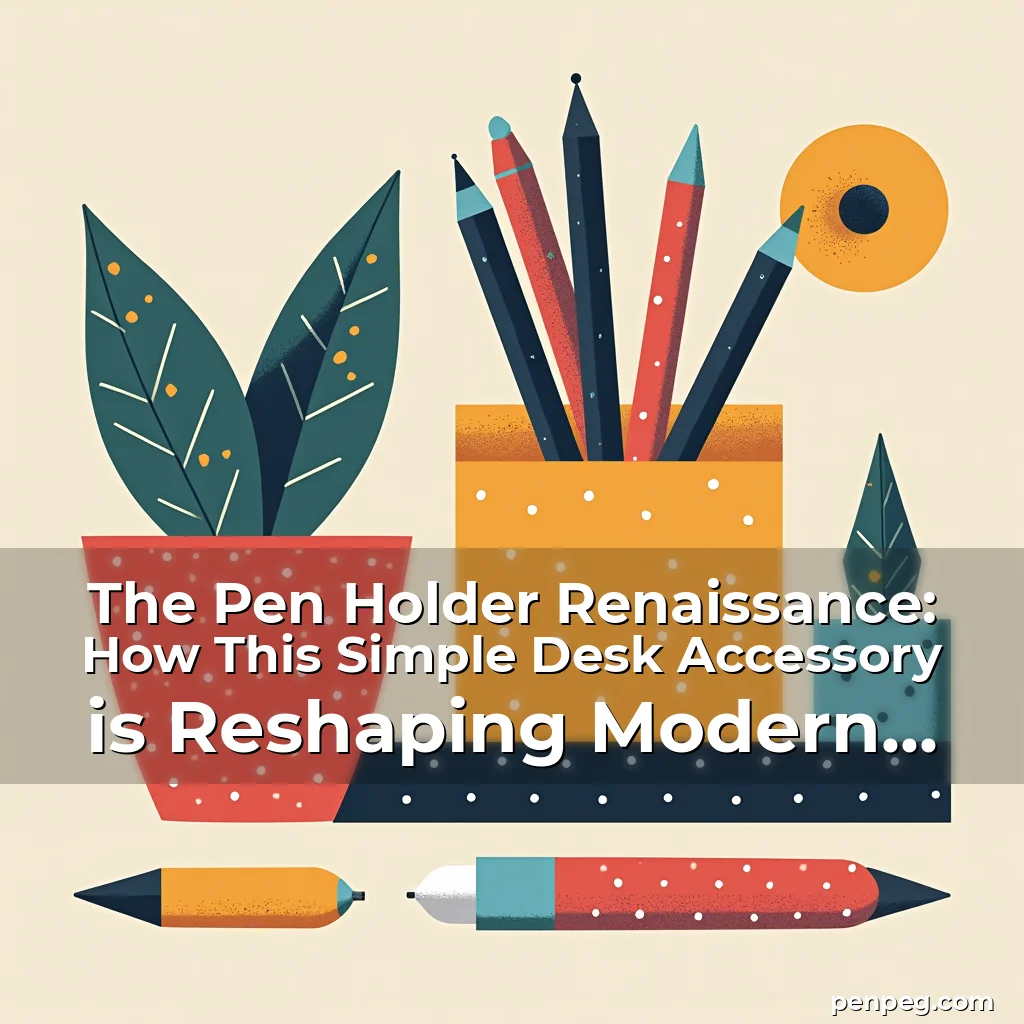
The Pen Holder Renaissance: How This Simple Desk Accessory is Reshaping Modern Workspaces
In an era dominated by digital interfaces and minimalist design trends, the humble pen holder has emerged as an unexpected hero in modern workspaces. What was once seen as merely a functional object for organizing writing instruments now holds symbolic value as a statement piece that reflects personal style and organizational philosophy.
This resurgence of interest in pen holders extends beyond aesthetics—it’s about creating intentional spaces that foster productivity through thoughtful curation. As we explore the evolution of these desk accessories from utilitarian objects to curated art forms, we uncover how they’re transforming our relationship with physical tools in the digital age.
Redefining Functionality Through Design Innovation
The contemporary pen holder market showcases remarkable creativity in merging practicality with artistic expression. Manufacturers are reimagining traditional shapes while incorporating materials ranging from natural wood grains to high-tech composites that adapt to various office environments.
Digital professionals seeking ergonomic benefits find relief in pen holders designed with anatomical curves that support wrist posture during prolonged typing sessions. These specialized designs demonstrate how functionality can evolve without compromising aesthetic appeal.
- Ergonomic models: Feature contoured bases that distribute weight evenly across surfaces
- Magnetic systems: Enable secure attachment to metal desks using built-in magnets
Smart pen holders integrate wireless charging capabilities for styluses used with tablets and hybrid laptops, bridging the gap between analog and digital workflows seamlessly. Some even include USB ports for device connectivity, transforming them into multifunctional workspace hubs.
Customizable options allow users to personalize their stationery ecosystems through interchangeable components—modular inserts that accommodate different pen sizes, color-coded compartments for categorizing writing implements, and adjustable dividers that grow with changing needs.
These innovations reflect a broader cultural shift towards integrating purposeful design elements into everyday objects rather than treating them solely as utility items. By prioritizing both form and function, modern pen holders contribute significantly to overall workspace satisfaction.
Historical Evolution of Pen Holders
To understand the current revival of pen holders, it’s essential to examine their historical journey—from simple clay vessels to sophisticated engineering marvels. Early examples date back to ancient civilizations where scribes stored quills in carved stone receptacles that also served decorative purposes.
The Industrial Revolution brought mass production techniques that enabled wider accessibility to quality pen holders made from porcelain and glass. These early versions often featured intricate engravings reflecting the owner’s social status or professional affiliations.
In the mid-20th century, plastic injection molding revolutionized manufacturing processes, allowing for more affordable yet durable pen holders shaped according to emerging design movements such as Bauhaus principles emphasizing clean lines and geometric simplicity.
Today’s market offers unprecedented variety with products crafted from sustainable bamboo, recycled metals, and biodegradable resins. This eco-conscious approach aligns with modern values while preserving the fundamental purpose of holding pens securely.
The transition from purely ornamental to highly functional devices mirrors broader societal changes in how people interact with physical objects in increasingly digitized environments. Understanding this progression provides context for appreciating contemporary design choices.
Cultural Significance of Pen Holders Across Societies
Pen holders transcend mere functionality; they serve as silent witnesses to human progress and cultural development. In many societies, these objects carry symbolic meanings related to education, authority, and creative expression.
Academic institutions have long used distinctive pen holders as part of their institutional identity. For example, universities may feature custom-designed holders incorporating school colors, emblems, or historical references within their decor.
Business cultures assign particular importance to the appearance of office supplies, including pen holders. A well-maintained collection might indicate professionalism and attention to detail—a subtle nonverbal cue communicated to clients and colleagues alike.
Creative professions like writers and artists develop strong attachments to their personal collections, viewing each item as a companion in the creative process. Some authors maintain entire cabinets filled with vintage holders collected over decades.
The diversity of interpretations highlights how universally relevant these small objects remain despite technological advancements. They continue to play roles in shaping perceptions and reinforcing identities in professional settings worldwide.
Psychological Impact of Curated Workspaces
Research in environmental psychology suggests that carefully organized workspaces enhance cognitive performance and emotional well-being. Pen holders become integral components in this equation when thoughtfully selected and arranged.
A study published in the Journal of Environmental Psychology found that individuals working in environments featuring curated display items experienced increased motivation levels compared to those in chaotic setups. Pen holders contributed to this effect through their role in maintaining order.
The act of selecting and arranging pen holders engages higher-order thinking skills associated with decision-making and spatial awareness. This mental engagement translates into improved task management abilities outside the immediate workspace environment.
Color theory applications further amplify psychological effects—specific hues incorporated into pen holder designs influence mood regulation and concentration spans. Blues promote calmness, greens encourage growth mindset, and neutrals create balanced focus.
By intentionally curating their selection of pen holders, professionals cultivate environments that support optimal functioning at work. This mindful approach transforms basic organization into strategic self-care practices.
Material Science Innovations in Modern Pen Holders
Advancements in material science have led to groundbreaking developments in pen holder construction, addressing durability concerns while enhancing visual appeal. Composite materials combine strength with lightweight properties ideal for frequent movement between workstations.
Nanotechnology applications enable self-cleaning surfaces resistant to ink stains and bacterial buildup—an important consideration for shared office spaces. Coatings infused with antimicrobial agents protect against common pathogens transmitted via touchpoints.
Bamboo fiber reinforced plastics offer sustainable alternatives without sacrificing structural integrity. These materials decompose naturally at end-of-life stages, reducing environmental impact typically associated with synthetic polymers.
Sustainable sourcing initiatives ensure ethical procurement of raw materials. Certifications guarantee responsible harvesting practices for woods used in premium wooden pen holders, supporting conservation efforts globally.
The integration of smart sensors allows some models to detect pen placement patterns, adjusting internal configurations automatically based on usage habits. This adaptive technology anticipates user preferences before conscious decisions need to be made.
Personalization Options in Contemporary Pen Holder Designs
Modern consumers demand greater customization in their workplace accessories, leading manufacturers to expand personalization offerings extensively. From engraved initials to bespoke color combinations, the possibilities seem endless for individual expression.
Laser engraving services enable precise detailing on metallic surfaces, making each pen holder uniquely identifiable. Custom logos can be imprinted for corporate gifts or promotional merchandise.
Some companies provide modular kits allowing customers to assemble pen holders according to preferred dimensions and features. Interchangeable components facilitate upgrades without requiring complete replacements.
Hand-painted finishes add artisanal touches unavailable through standard production methods. Artists collaborate with brands to produce limited edition series capturing seasonal themes or cultural motifs.
Virtual reality platforms let users visualize potential arrangements digitally before purchasing physical units. Augmented reality apps overlay product information onto real-world settings, aiding in informed selections.
These personalization avenues empower individuals to craft workspaces that genuinely reflect their personalities while meeting practical requirements efficiently.
Integration with Smart Office Ecosystems
The convergence of IoT technologies and furniture design has created new opportunities for pen holders to participate actively in smart office environments. These connected devices extend beyond passive storage functions into interactive components of larger system networks.
Bluetooth-enabled pen holders can sync with mobile devices to track usage patterns and suggest maintenance schedules proactively. Sensors monitor humidity levels inside compartments, alerting users when conditions risk damaging delicate writing instruments.
Integrated voice assistants respond to commands for retrieving specific pens or initiating document searches. Natural language processing enables hands-free interaction while maintaining workflow continuity.
Data analytics modules compile usage statistics providing insights into writing frequency and preferred tool types. This information helps identify efficiency gains achievable through better organization strategies.
The ability to connect with other smart office equipment creates seamless transitions between tasks—automatically powering down when not in use, syncing calendars for scheduled meetings, or triggering lighting adjustments based on ambient light levels.
Futuristic Concepts Shaping Next-Generation Pen Holders
Ongoing research explores revolutionary ideas poised to redefine what pen holders could achieve in future iterations. Scientists investigate bioengineered materials capable of adapting dynamically to environmental factors affecting usability.
Self-repairing polymer coatings promise extended lifespans by autonomously mending minor damages caused by regular handling. This innovation reduces waste generated from frequent replacements typical of conventional products.
Flexible electronics embedded within structures enable responsive behavior—adjusting grip firmness based on pressure applied by users’ fingers during writing activities. Such sensitivity enhancements aim to reduce hand fatigue through optimized ergonomics.
Biometric authentication systems integrated into locking mechanisms safeguard sensitive documents stored alongside writing implements. Fingerprint scanners verify authorized access before releasing secured contents.
Augmented reality displays project contextual information onto surfaces when viewed through compatible devices, transforming static objects into dynamic informational portals tailored specifically for each user’s needs.
Environmental Considerations in Manufacturing Practices
Sustainability has become a critical factor influencing consumer choices regarding pen holders and similar office accessories. Eco-friendly production methods address growing concerns about resource depletion and climate change impacts.
Closed-loop recycling programs ensure old pen holders get repurposed rather than ending up in landfills. Remanufacturing facilities disassemble worn-out units to extract usable components for new productions.
Water-based adhesives replace harmful solvents commonly found in traditional gluing processes. Non-toxic dyes eliminate chemical exposure risks particularly important for offices frequented by children or pregnant employees.
Carbon footprint calculations guide material selection toward locally sourced resources minimizing transportation emissions. Solar-powered manufacturing plants reduce reliance on fossil fuels in production phases.
Green certifications validate compliance with strict environmental standards, giving buyers confidence in making responsible purchases aligned with sustainability goals.
Community Building Around Pen Holder Enthusiasts
An online community has formed around enthusiasts dedicated to collecting and showcasing exceptional pen holders. Social media groups and specialty forums facilitate knowledge sharing among members passionate about this niche area of stationary culture.
Annual events bring together collectors who exchange rare finds, discuss restoration techniques, and celebrate innovations in design and craftsmanship. Exhibitions highlight historically significant pieces alongside cutting-edge prototypes currently under development.
Collaborative projects involve artisans experimenting with unconventional materials pushing boundaries in what constitutes acceptable construction approaches for functional objects.
Virtual galleries host rotating exhibits displaying private collections from around the world, fostering appreciation for diverse styles and periods represented within the medium.
This vibrant ecosystem demonstrates how seemingly ordinary items can generate profound connections between individuals united by shared interests transcending geographical limitations.
Conclusion
The pen holder stands at the intersection of tradition and innovation, embodying centuries of human ingenuity while embracing futuristic possibilities. Its enduring relevance speaks volumes about our innate desire to organize, express ourselves, and create meaningful interactions with everyday objects.
As we navigate an ever-evolving landscape of workspaces and technologies, the pen holder remains a constant reminder of the power contained within simplicity. By choosing thoughtfully designed holders that resonate personally and professionally, individuals shape environments that nurture both productivity and inspiration.