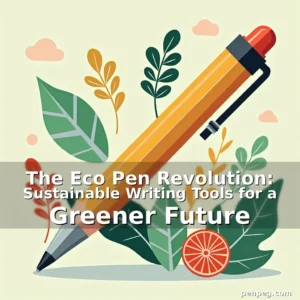

The Sustainable Revolution: Understanding Eco Pens and Their Impact on Writing Culture
In an era where environmental consciousness is reshaping consumer behavior, the humble pen has undergone a remarkable transformation. The rise of eco pens marks a pivotal shift toward sustainable practices within the stationery industry, offering writers, students, and professionals alike a way to reduce their carbon footprint without compromising functionality.
These environmentally friendly alternatives are crafted from biodegradable materials, recycled components, and non-toxic inks that align perfectly with green living principles. As awareness grows around plastic pollution and resource depletion, eco pens emerge as a powerful symbol of responsibility and innovation.
Redefining Stationery Through Environmental Responsibility
Eco pens represent a paradigm shift in how we perceive everyday objects. Traditionally associated with disposability, pens now serve as ambassadors of sustainability, challenging users to reconsider their consumption habits.
This transition reflects broader societal changes towards valuing products that contribute positively to ecological balance. By choosing eco-friendly writing instruments, individuals actively participate in reducing waste generation while supporting ethical manufacturing processes.
- Biodegradability: Many modern eco pens utilize plant-based resins derived from renewable resources such as cornstarch or bamboo fibers, ensuring they decompose naturally over time.
- Recycled Materials: Some models incorporate post-consumer plastics or reclaimed wood, transforming discarded items into functional tools through innovative design engineering.
The Science Behind Eco-Friendly Pen Construction
Understanding the composition of eco pens provides insight into their environmental benefits. Unlike conventional ballpoint pens made primarily from petroleum-based polymers, these sustainable variants rely on alternative material sources.
Sustainable manufacturers employ rigorous testing protocols to ensure durability matches traditional counterparts despite using organic compounds. This commitment to quality guarantees performance parity without sacrificing planetary health.
Making the Switch: A Material-by-Material Analysis
A closer look at common eco pen materials reveals fascinating innovations. Bamboo, known for its rapid growth cycle and minimal water requirements, frequently appears in pen designs due to its natural strength and aesthetic appeal.
Paper-based pens constructed from compressed cellulose offer another compelling option. These pens degrade rapidly when exposed to moisture, making them ideal for single-use scenarios yet still maintaining structural integrity during active usage periods.
Economic Implications of Adopting Eco Pens
The financial aspect of transitioning to eco pens warrants careful consideration. While initial costs may be slightly higher than standard pens, long-term savings often offset this difference through reduced replacement frequency.
Moreover, businesses adopting bulk purchasing strategies can achieve significant cost reductions by leveraging economies of scale. Bulk orders typically result in lower unit prices compared to individual purchases.
- Cost Efficiency Over Time: High-quality eco pens designed for repeated refilling eliminate ongoing expenses related to disposable ink cartridges.
- Corporate Incentives: Organizations implementing green initiatives sometimes receive tax incentives or recognition programs for promoting environmentally responsible choices among employees.
Cultural Shifts Driven by Eco Pen Adoption
The adoption of eco pens extends beyond mere product selection; it signifies a cultural evolution embracing mindful consumption patterns. Educational institutions increasingly integrate these pens into curricula emphasizing environmental stewardship.
Students exposed to eco-conscious tools develop early appreciation for sustainability, influencing future decision-making regarding personal and professional responsibilities towards nature conservation efforts.
Global Perspectives on Eco Pen Usage
Different regions exhibit varying degrees of acceptance towards eco pens based on local regulations and market dynamics. Countries with stringent environmental policies tend to see faster adoption rates of sustainable office supplies.
Conversely, areas lacking robust recycling infrastructure face challenges in realizing full potential benefits of eco pens unless accompanied by parallel improvements in waste management systems.
Educational Applications of Eco Pens
Integrating eco pens into educational settings offers dual advantages: teaching practical skills alongside instilling environmental values. Schools utilizing these pens create immersive learning environments focused on real-world applications of sustainability concepts.
Interactive classroom activities involving eco pens encourage hands-on engagement with topics ranging from material science to climate change mitigation strategies.
Futuristic Innovations in Eco Pen Technology
Ongoing research aims to enhance both functionality and sustainability aspects of eco pens. Scientists experiment with novel biomaterials capable of self-repair mechanisms mimicking biological regeneration processes found in certain plants.
Advancements in nanotechnology promise development of ultra-thin refillable cartridges containing concentrated pigments, significantly reducing overall material consumption required for each writing session.
Consumer Awareness Campaigns Driving Demand
Rising demand for eco pens correlates strongly with effective marketing campaigns highlighting their environmental credentials. Social media platforms play crucial roles in spreading awareness about available options and success stories from early adopters.
Collaborative partnerships between environmental organizations and stationery brands amplify message reach, creating synergies that benefit both ecological goals and business objectives simultaneously.
Challenges Facing the Eco Pen Industry
Despite growing popularity, several obstacles hinder widespread implementation of eco pens globally. Supply chain complexities arise from sourcing specialized raw materials that meet strict sustainability criteria.
Manufacturing facilities must invest heavily in new equipment compatible with producing high-performance eco pens consistently across different geographic locations experiencing diverse climatic conditions.
Comparative Analysis With Traditional Writing Instruments
When evaluating eco pens against traditional counterparts, key differences emerge concerning lifecycle impact assessments. Conventional pens generate substantial landfill waste upon disposal whereas properly managed eco pen end-of-life scenarios yield negligible negative effects.
However, current production methods for some eco pen types require energy-intensive processing stages comparable to those used in standard pen manufacture, indicating room for further optimization within the sector.
Community Building Around Eco Consciousness
Online forums dedicated to discussing various aspects of eco pens foster knowledge sharing amongst enthusiasts worldwide. These communities provide invaluable support networks enabling members to troubleshoot issues or share best practices related to maintenance techniques.
Local workshops focusing specifically on crafting personalized eco pens allow participants opportunities not only to learn but also connect socially while contributing meaningfully towards environmental protection goals.
Policy Influences Shaping Eco Pen Market Trends
Governments play instrumental roles in determining trajectories of eco pen markets via legislative frameworks governing packaging standards and promotional guidelines. Policies mandating minimum percentages of recyclable content in office supplies directly influence manufacturer approaches.
Taxation structures favoring companies committed to green transitions incentivize increased investment in R&D aimed at improving efficiency metrics relevant to eco pen production cycles.
Conclusion
Eco pens stand at the intersection of technological advancement and ecological preservation, representing tangible progress toward greener lifestyles. Their increasing prevalence signals hopeful shifts in collective attitudes surrounding daily consumption choices.
By prioritizing sustainable alternatives whenever possible—including selecting eco pens—individuals empower themselves and future generations to navigate a world increasingly defined by environmental challenges requiring creative solutions grounded in responsible innovation.